Lars Schmitt · 23 September 2026
Examining How Custom Alert Systems Help Website Managers Respond Quickly to Shifts in Search Visibility Metrics
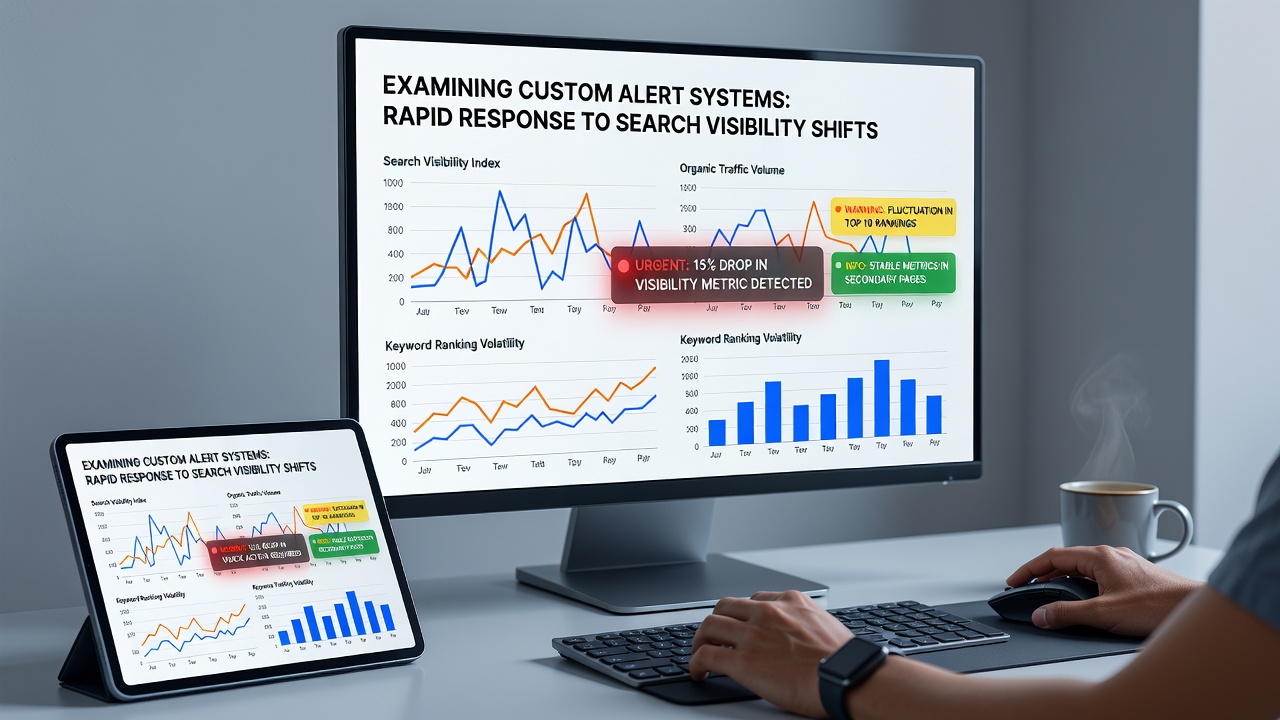
Search visibility metrics include keyword position data, organic traffic volume, and impression counts from major engines, while website managers track these indicators daily to maintain competitive standing and custom alert systems deliver immediate notifications when predefined thresholds get crossed so teams can investigate and adjust strategies without delay.
Understanding Core Search Visibility Metrics
Search engines compile ranking positions for target terms along with click and impression totals, and these numbers shift due to algorithm updates, competitor actions, or content changes. Data from the European Commission's digital strategy reports shows that visibility fluctuations have increased in frequency since 2024, with many sites experiencing rank movements of five positions or more within single weeks. Observers note that early detection becomes essential because prolonged drops in impressions often lead to reduced referral traffic and lower conversion rates over time.
Mechanics Behind Custom Alert Systems
Custom alert systems integrate with analytics platforms such as search console exports and third-party rank trackers, then apply user-defined rules that trigger messages via email, SMS, or dashboard pop-ups. Rules might specify a ten percent decline in average position across monitored keywords or a sudden spike in zero-click searches, and the systems process incoming data feeds every few hours to catch these patterns. Researchers at institutions studying digital performance have documented how such automation reduces response times from days to minutes in many documented cases, allowing managers to examine server logs or content freshness issues before competitors gain ground.
Integration With Existing Monitoring Workflows
Website teams often connect alert platforms to broader dashboards that combine visibility data with technical health signals like crawl errors and page speed scores, creating a unified view that highlights correlations between technical problems and ranking losses. In September 2026, several industry analyses pointed to heightened volatility following core algorithm refreshes, and managers who had configured alerts for both ranking and traffic metrics reported faster identification of affected page groups. Those who studied these implementations found that layering alerts across multiple data sources, rather than relying on single-metric triggers, produced more reliable signals and fewer false positives.

Response Protocols Triggered by Alerts
Once an alert fires, managers typically follow structured checklists that include verifying data accuracy, checking for recent site modifications, and reviewing competitor movements through shared ranking tools. Australian Competition and Consumer Commission publications on digital market dynamics indicate that rapid response frameworks help organizations limit visibility losses during peak fluctuation periods, especially when teams coordinate across content, development, and analytics roles. The process often involves temporary content audits or internal linking adjustments that restore previous metric levels within days rather than weeks.
Scalability Across Site Types and Sizes
Enterprise sites with thousands of pages configure alerts at category and individual URL levels, whereas smaller operations focus on high-value keywords and landing pages that drive the majority of conversions. Studies from academic research groups have shown that scalable alert architectures accommodate both approaches by permitting granular rule sets without overwhelming notification volume. People managing multiple regional domains discover that geographic segmentation within the same system prevents alert fatigue and directs attention to the most relevant market shifts at any given moment.
Conclusion
Custom alert systems continue to evolve alongside search engine changes, providing website managers with structured ways to monitor visibility metrics and initiate corrective actions at the first sign of movement. The combination of timely data delivery and predefined response steps supports consistent performance across varying site scales and market conditions.